Student Enquiry – The Beginning of the Journey
Every study abroad journey starts with a students first question. Today students get in touch with study agencies in many different ways like through their websites social media, online ads, education fairs, webinars, referrals, emails, phone calls, WhatsApp and in-person meetings. No matter how the student gets in touch the goal is always the same: to understand what the student wants and start making a plan that's just for them.
Modern agencies do not use fashioned ways like spreadsheets or handwritten notes. Instead they use computer systems to keep track of every students information in one place. This helps the people who advise students to see all their details, like their records, where they want to study what they want to study how much money they have and what they have talked about before. So every time they talk it is more meaningful and tailored to the students needs.
Understanding the Students Goals
The time a student talks to an advisor is not just a meet-and-greet. It is the start of the study abroad journey. At this stage the advisors take the time to understand the students background what they want to achieve in their career how money they have which countries they like, how good their English is and what they want to do in the long term.
Of immediately suggesting universities the advisors focus on understanding what the student wants to do in the future. Some students want to get a degree that is recognised around the world while others want to work after they finish studying or become permanent residents. By understanding these goals from the start the advisors can give realistic advice instead of general suggestions.
Comprehensive Profile Assessment
Once the students goals are clear the agency looks at their profile in detail. This means checking their records, previous qualifications, grades, gaps in their studies work experience if their passport is valid and their English language test scores.
This assessment helps figure out which universities and courses are the fit for the student. Of encouraging them to apply to universities that might not accept them the advisors identify realistic options and look for scholarships, foundation courses or English language courses that might be helpful. This careful evaluation increases the students chances of getting accepted.
Selecting the Right Study Destination
Choosing where to study is not about comparing tuition fees. Every country has its education system, visa rules, job opportunities, cultural experiences and lifestyle. A study abroad agency explains these differences so students can make informed decisions.
The advisors talk about things like the quality of education cost of living scholarship opportunities, healthcare, part-time work job prospects after graduation, visa rules after study, immigration options, campus life, climate and student safety. Of pushing one country for every student the agencies suggest countries that fit each students academic background, budget and career goals.
Course and University Selection
After choosing a country the next step is to pick the course and university. This is very personal because every students academic profile and career dreams are different.
Of just looking at university rankings modern agencies check the course content, how relevant it is to the industry internship opportunities, how employable graduates are tuition costs, scholarship options, campus facilities, student support, research opportunities and admission requirements. Students get guidance to help them compare universities and make a final decision that fits their dreams and budget.
Financial Planning and Budget Preparation
Planning finances is a part of studying abroad. Students need to think about more than tuition fees. They need to consider accommodation, health insurance, visa fees, travel, daily expenses and emergency money. Without planning unexpected costs can cause stress during the application process.
A study abroad agency helps students make a realistic financial plan by explaining estimated costs for different countries and advising on education loans, scholarships, sponsorship requirements and financial documents. This ensures students and their families understand the investment needed before starting the application process.
Document Preparation
Preparing documents is one of the critical steps in the study abroad process. Universities expect applications to include properly organised documents and small mistakes can delay admission decisions.
Modern study abroad agencies carefully check every document before submission, including records, degree certificates, passports, English language test scores, personal statements, letters of recommendation resumes, work experience certificates and financial documents. Experienced admissions specialists ensure every document meets university requirements reducing the likelihood of delays or requests for information.
University Application Submission
Once all documents are reviewed and approved, the agency. Submits university applications. This stage requires accuracy, attention to detail and understanding of each universitys admission process.
Professional advisors ensure application forms are completed correctly supporting documents are uploaded in the format deadlines are met and all university-specific requirements are satisfied. Because agencies regularly talk to university admissions teams they understand changing admission policies. Can help students avoid common application mistakes.
Continuous Application Tracking
Submitting an application is one part of the admissions process. Study abroad agencies keep track of every application until a final decision is made.
Throughout this stage admissions officers communicate directly with universities to respond to document requests, clarify application details monitor admission progress and keep students updated. This follow-up ensures applications move smoothly reducing waiting periods and confusion for students.
Offer Letter Review and Decision Making
Getting an offer letter is exciting. It also requires careful evaluation. Students often receive admission offers, each with different tuition fees scholarship opportunities, conditions and deadlines.
Experienced advisors help students compare these offers by explaining the differences between unconditional offers, scholarship conditions, tuition deposits, programme outcomes and university expectations. This guidance allows students to confidently choose the institution that best supports their career objectives.
Visa Preparation and Application Support
The visa stage is one of the important parts of the study abroad journey because approval depends on accurate documentation and compliance with immigration requirements.
A modern study abroad agency guides students through every aspect of the visa application process, including application forms, financial evidence, medical exams, health insurance requirements, police clearance certificates, biometric appointments and interview preparation. Every document is carefully checked before submission to minimise errors. Maximise the likelihood of visa approval.
Pre-Departure Preparation
After getting a visa the focus shifts to preparing students for life overseas. Agencies help students choose accommodation based on their preferences, budget and proximity to campus. Whether choosing university residences, shared apartments, private rentals or homestays students receive guidance to make decisions.
At the time agencies organise comprehensive pre-departure briefings that prepare students for international travel, airport procedures, immigration formalities, banking, healthcare, transportation, local laws, cultural differences and everyday life in their destination country. These sessions help students feel more confident before starting their education.
Post-Arrival Student Support
The responsibilities of a modern study abroad agency do not end when a student travels. Many agencies support students after they arrive by helping them complete university enrolment settle into accommodation get SIM cards, open bank accounts understand public transport systems and access student support services.
If students face challenges during their studies experienced agencies can communicate directly with universities to help resolve issues. This ongoing relationship provides reassurance. Ensures students always have access to professional guidance when they need it.
Building Long-Term Student Success
Leading study agencies understand that success goes beyond university admission. Their relationship with students often continues throughout their journey and even after graduation. Many agencies provide career guidance, internship advice, networking opportunities and alumni support to help graduates achieve term professional success.
By maintaining relationships with students agencies create a community of successful alumni who often recommend the agency to friends and family. This trust is built through service, honest advice, transparent communication and genuine commitment to student success.
Conclusion
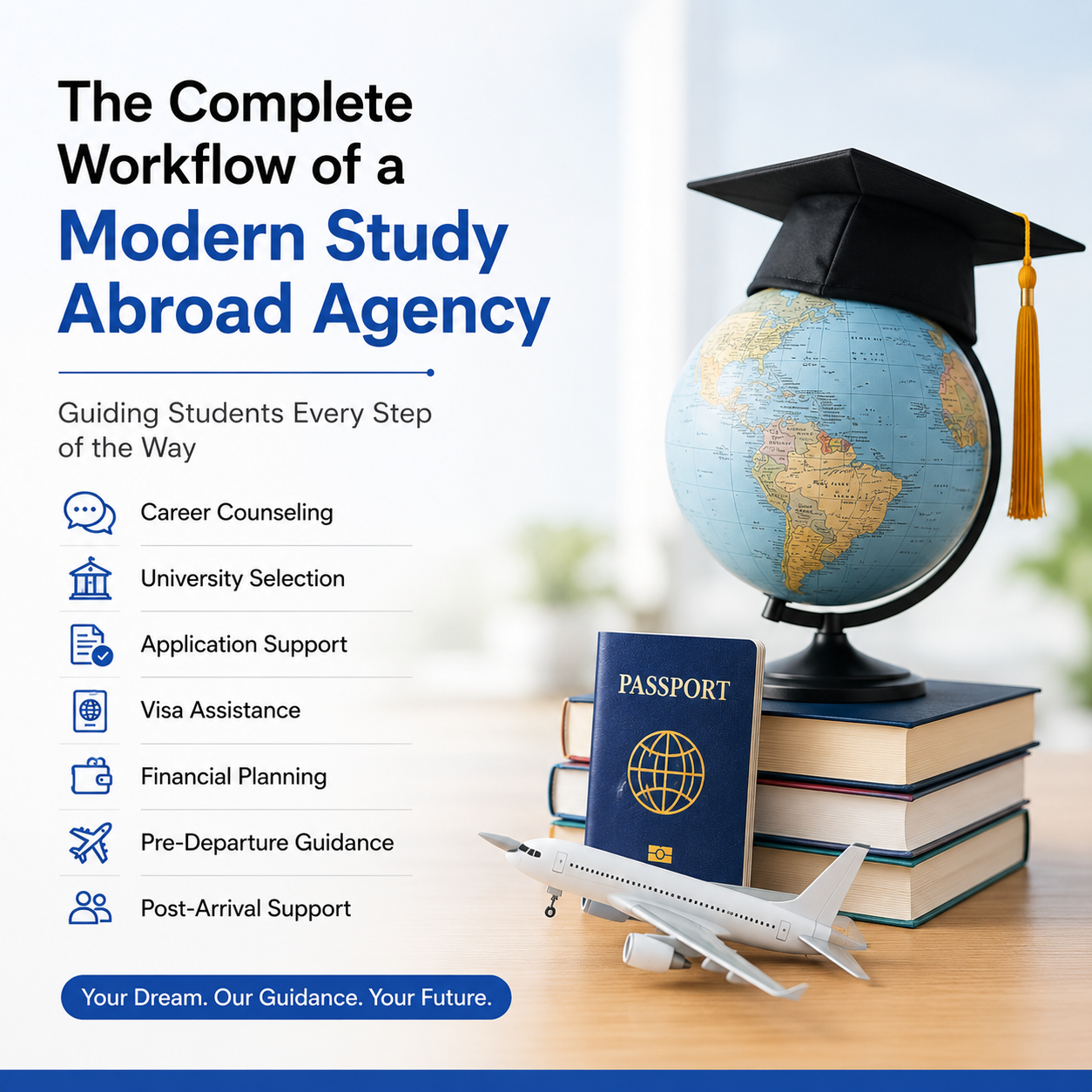
The workflow of a study abroad agency is much more than just applying to universities. Every stage from the question and career advice to university selection, application management, visa processing, pre-departure preparation and post-arrival support plays a crucial role, in helping students achieve their dreams of studying abroad.
With advisors strong university partnerships, advanced technology and a student-first approach modern study abroad agencies make what can be a complex and overwhelming process simpler. By providing guidance at every step they enable students and their families to move forward with confidence knowing they have expert support throughout one of the most important journeys of their lives.