Understanding the Concept of Niching Down
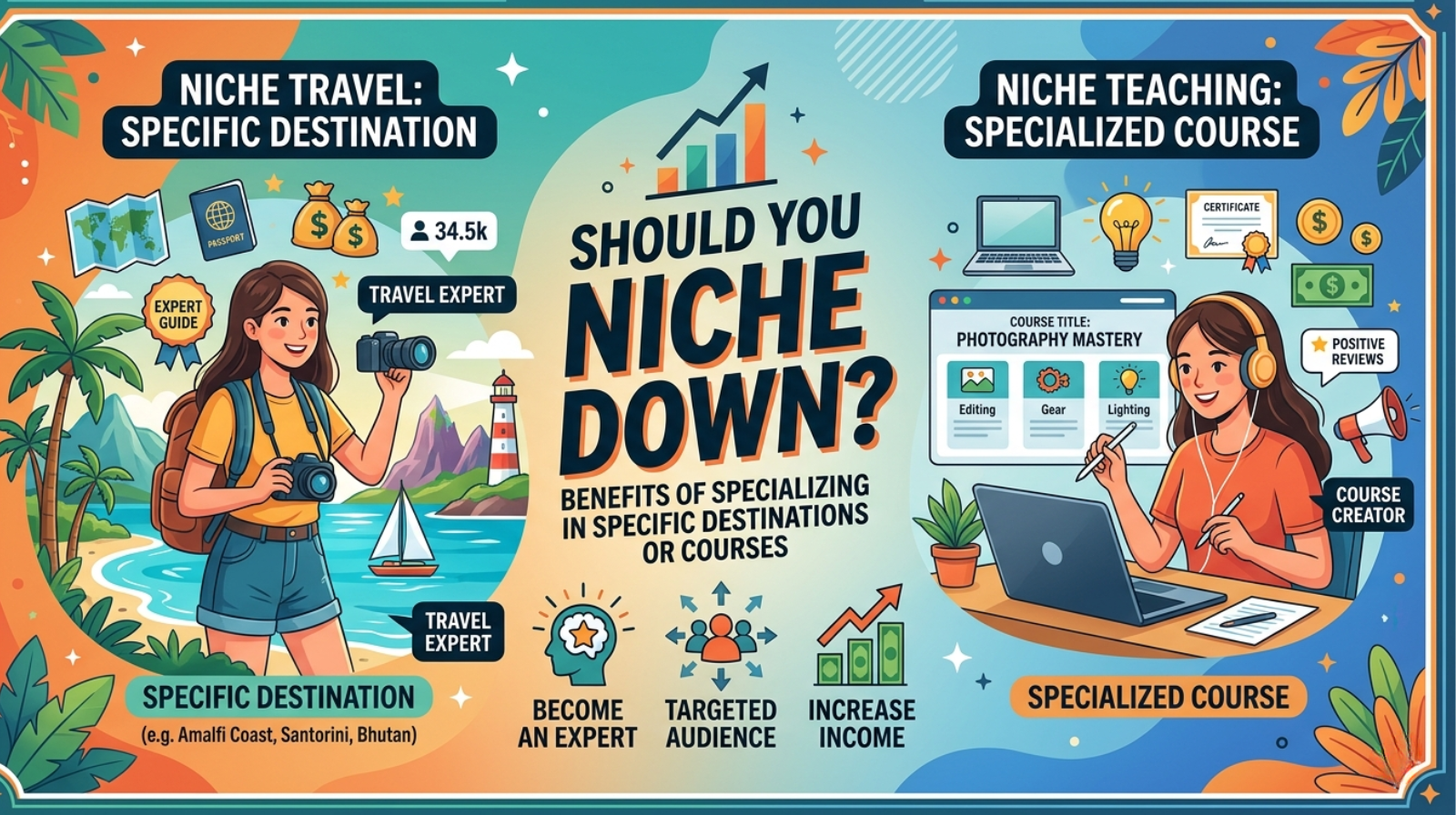
Niching down means focusing your efforts on a specific area of expertise, rather than trying to appeal to a broad audience. This can be particularly beneficial in fields like travel or education, where specialization can distinguish you from competitors.
- Targeted Audience: By narrowing your focus, you can attract a dedicated audience interested in specific destinations or courses. For instance, a travel blogger specializing in eco-friendly travel to Costa Rica will attract environmentally conscious travelers.
- Expert Status: Specializing can position you as an expert in your niche, making it easier for clients to trust your recommendations. A yoga instructor who focuses on prenatal classes can appeal specifically to expectant mothers looking for tailored instruction.
- Content Creation: Focusing on a niche allows you to create more relevant and engaging content. A course creator who focuses on digital marketing for small businesses can develop targeted materials that resonate with that specific audience.
Pro Tip: Conduct market research to identify gaps in your niche. Tools like Google Trends can help you understand what potential customers are searching for, allowing you to tailor your offerings effectively.
Why Specialize in Travel Destinations?
Specializing in travel destinations can set you apart in a crowded market. Here are some compelling reasons to consider this approach:
- Expertise Builds Trust: When you focus on specific locations, you become an authority. Travelers are more likely to trust an expert on Bali, for instance, than a generalist covering the entire globe.
- Targeted Marketing: Niche marketing allows for tailored content. By honing in on a specific destination like Italy, you can create detailed guides, itineraries, and tips that resonate with potential travelers.
- Enhanced Partnerships: Specialization opens doors to collaborate with local businesses, tourism boards, and influencers in that area. For example, a travel blogger focusing on Japan might work closely with local hotels or tour companies.
- Community Engagement: Niche audiences often build strong communities. Engaging with followers interested in a particular destination can foster loyalty and encourage repeat visits.
Pro Tip: Use social media groups focused on your destination to network and gather insights. This can also inform your content and strengthen your authority in that niche.
According to a recent survey by Statista, 78% of travelers prefer to consult specialists for their travel plans.
Benefits of Specializing in Travel
Specializing in travel can yield numerous benefits that enhance your expertise and appeal to your audience.
- Enhanced Authority: By focusing on a specific destination or type of travel, you position yourself as an expert. For example, if you specialize in eco-tourism in Costa Rica, your insights will be more trusted than general travel advice.
- Targeted Audience: Niche specialization attracts a specific demographic. A blog focusing on family-friendly activities in London, for instance, will attract parents planning vacations, creating a loyal following.
- Higher Engagement: Content tailored to a niche often sees higher engagement rates. A travel enthusiast interested in gourmet food tours in Italy is more likely to share and comment on content that speaks directly to that experience.
- Better SEO Opportunities: Focusing on a niche allows for targeted keywords that can improve your search engine ranking. Instead of competing for broad terms like "travel tips," you can dominate phrases like “best hidden gems in Tuscany.”
Pro Tip: Regularly engage with your audience through polls or Q&A sessions to refine your niche based on their preferences. This not only builds community but also ensures your content remains relevant.
Becoming a Travel Agent for Niche Destinations
Becoming a travel agent focused on niche destinations can be a rewarding venture. Specializing allows you to build deep knowledge about specific areas, which can enhance your credibility and draw clients seeking expert advice.
- Identify Your Niche: Consider areas that ignite your passion. This could be anything from eco-tourism in Costa Rica to culinary tours in Italy.
- Research Destinations: Stay updated on travel trends and hidden gems. For example, destinations like Georgia (the country) have seen a surge in interest due to affordable prices and unique experiences.
- Build Relationships: Connect with local businesses and tour operators in your niche. This can lead to exclusive offers and insider knowledge that you can pass on to clients.
Pro Tip: Create a blog or social media account dedicated to your niche. Share travel tips, personal experiences, and destination highlights. This not only showcases your expertise but also engages potential clients.
According to a recent survey by Statista, 60% of travelers prefer booking with agents who specialize in their desired destination, emphasizing the importance of niching down for success.
Developing a Travel Niche Strategy
Identifying your travel niche involves understanding both your passions and market demand. Start by considering these steps:
- Assess Your Interests: Think about the destinations or travel styles that excite you. For example, if you’re passionate about culinary travel, focus on food tours in specific regions, such as Italian cooking classes in Tuscany.
- Research Market Demand: Use tools like Google Trends or social media hashtags to gauge interest in specific areas. A recent report showed that eco-tourism is on the rise, suggesting potential for content in sustainable travel.
- Analyze Competitors: Look at successful travel blogs or agencies within your niche. For instance, “The Blonde Abroad” excels by focusing on solo female travel, providing a unique perspective in a crowded market.
- Target Your Audience: Define who your ideal traveler is. Are they luxury seekers, adventure enthusiasts, or budget backpackers? Tailor your content to solve their specific problems.
Pro Tip: Start small by focusing on a specific destination or type of travel. As your authority grows, you can expand into related areas.
Specific Destination Specialist: A Closer Look
Focusing on a specific destination can significantly enhance your brand’s visibility and authority. By becoming a destination specialist, you position yourself as the go-to expert, attracting clients who are specifically interested in that locale.
- Targeted Marketing: Tailor your content and promotional strategies to resonate with travelers interested in that destination. For instance, a travel agent specializing in Bali can create in-depth guides, emphasizing local culture, cuisine, and hidden gems, making their content more appealing.
- Enhanced Customer Trust: When clients see that you know every detail about their chosen destination, they’re more likely to trust your recommendations. For example, Jessica, a travel blogger, focused solely on the Amalfi Coast and saw a 50% increase in engagement due to her authentic, in-depth posts.
- Opportunities for Partnerships: Collaborating with local businesses—restaurants, tour guides, and accommodations—can lead to exclusive deals for your customers, further enhancing your offerings.
Pro Tip: Regularly update your knowledge on travel regulations and trends for your niche destination. This keeps your content fresh and relevant, ensuring clients always find value in your expertise.
The Role of a Golf Course Travel Specialist
A golf course travel specialist plays a crucial role in enhancing the travel experience for golf enthusiasts. They possess in-depth knowledge of various destinations and golf courses, allowing them to offer tailored recommendations based on individual preferences.
- Customized Itineraries: They create personalized travel plans that include tee times, transportation, and accommodation. For example, a specialist might design a week-long trip to Scotland, including rounds at iconic courses like St. Andrews and Royal Aberdeen.
- Local Insights: These specialists often have insider knowledge about local golf culture and hidden gems. They can recommend the best times to play, dining options nearby, and even local events.
- Time-Saving: By handling all the logistics, they save clients time and stress. Instead of scouring the internet for information, travelers can rely on their expertise, ensuring a smooth experience.
Pro tip: When selecting a specialist, look for someone with firsthand experience on the courses you’re interested in. Their personal insights can make a significant difference in your trip.
How to Choose Your Travel Niche
When choosing your travel niche, consider the following factors to ensure it aligns with your interests and audience needs:
- Passion and Knowledge: Choose a niche that excites you. For instance, if you love hiking, consider specializing in adventure travel focusing on hiking trails across various countries.
- Target Audience: Identify who you want to reach. Are your readers families, solo travelers, or luxury seekers? Tailor your content to meet their specific interests.
- Market Demand: Research trending travel niches. Tools like Google Trends can reveal what travelers are searching for. For example, eco-tourism has gained popularity, making it a ripe area for content creation.
- Competitor Analysis: Examine what others in your potential niche are doing. If you notice a gap or a unique angle, that could be your opportunity. For instance, many bloggers focus on European travel, but fewer specialize in hidden gems in Eastern Europe.
- Monetization Potential: Consider how you plan to monetize your niche. Some niches offer more affiliate marketing opportunities than others. For example, a blog on luxury travel might attract high-end brand partnerships.
Pro Tip: Test your niche with a few blog posts before fully committing. This will allow you to gauge interest and refine your approach based on reader feedback.
Challenges and Considerations
- Market Saturation: As niches become popular, they can quickly reach saturation. For example, if many travel bloggers start focusing on eco-tourism in Costa Rica, it may become challenging to differentiate your content.
- Audience Limitation: Specializing may limit your audience size. While a targeted niche can yield loyal followers, it can also mean fewer potential readers. Consider whether your niche aligns with your long-term goals.
- Shifting Trends: Travel preferences change over time. A course focusing on a specific destination may become less popular. Staying updated with trends is crucial. For instance, if culinary travel declines, diversifying content or adapting to new interests may be necessary.
- Content Creation Pressure: Niche content often requires in-depth knowledge and consistent updates. Keeping your expertise fresh can be demanding.
- Pro Tip: Regularly engage with your audience through surveys or social media polls to ensure your niche remains relevant and appealing. This can help you pivot if necessary while keeping your community engaged.
Conclusion
Narrowing your focus can be a game changer for your business. By specializing in specific destinations or courses, you can enhance your authority and attract a more dedicated audience. Here are some key takeaways:
- Targeted Marketing: A niche allows for more effective marketing strategies tailored to specific interests, leading to higher engagement rates.
- Expert Status: Becoming an authority in a niche makes you the go-to resource, establishing trust with clients. For example, a travel blog focusing solely on eco-tourism in Costa Rica has seen increased traffic and partnerships with local eco-friendly businesses.
- Reduced Competition: A focused approach can minimize competition, making it easier to stand out.
Pro Tips:
- Research your audience to identify a niche that resonates with them.
- Continuously gather feedback to refine your offerings and maintain relevance.
- Leverage social media to promote niche content and connect with like-minded individuals.
In conclusion, specializing can lead to greater success and fulfillment in your endeavors. Embrace the power of niche marketing and watch your brand thrive!