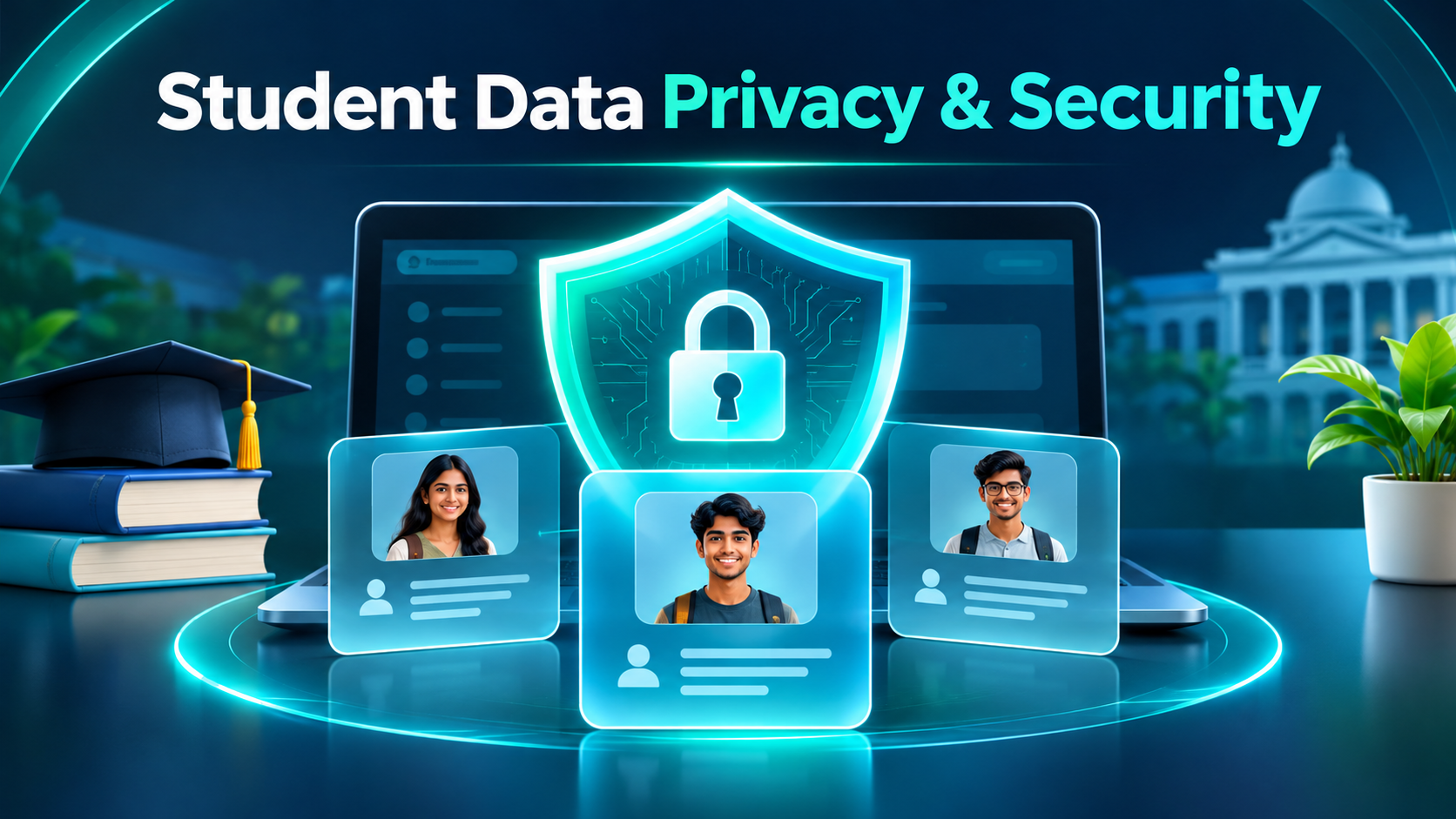
Why Is Student Data Privacy Important in Educational CRM Systems?
Student data privacy means collecting, using, sharing and retaining personal information responsibly, with appropriate safeguards against unauthorized access.
Educational organizations frequently manage information such as:
Student names, addresses, email IDs and telephone numbers.
Academic transcripts, examination scores and certificates.
Passport details and other identification documents.
University applications, course preferences and admission records.
Fee invoices, payment records and counseling communications.
For example, a Bengaluru-based overseas education consultancy may handle hundreds of applications containing academic records and identification documents. If staff share these records through unsecured channels, students could face identity theft, fraud or privacy violations.
Strong privacy practices reduce these risks, improve operational accountability and help institutions demonstrate that student information is handled responsibly.
What Are the Most Common Student Data Security Risks?
Educational CRM systems can face several security challenges, particularly when multiple counselors, administrators and external agents access the same records.
1. Unauthorized Access
Employees may accidentally receive access to information unrelated to their responsibilities. Shared accounts and excessive permissions increase this risk.
2. Phishing and Weak Passwords
Cybercriminals may impersonate students, university representatives or administrators to obtain login credentials or confidential documents.
3. Unsecured Document Sharing
Sending passports, transcripts or financial records through personal email accounts or public file-sharing links can expose confidential information.
4. Data Loss and Accidental Deletion
System failures, accidental deletion or ransomware can disrupt admissions operations when reliable recovery procedures are unavailable.
5. Third-Party Integration Risks
Connected messaging tools, web forms and marketing applications may process student information. Each integration introduces additional security and privacy considerations.
Institutions should review these risks before expanding their digital admissions workflows.
How Can You Protect Student Information in Your CRM?
Protecting student information requires a combination of technical safeguards, administrative policies and employee awareness.
Implement Role-Based Access Control
Role-based access control allows institutions to assign permissions according to employee responsibilities.
For example:
User Role | Recommended Access |
Admission counsellor | Assigned student enquiries and applications |
Finance employee | Invoices and payment-related records |
Branch manager | Authorised branch-level information |
System administrator | Configuration and approved administrative functions |
External agent | Only permitted referred-student information |
EduCtrl documents staff roles and permissions within its education consultancy CRM features. Administrators should review permission settings and apply the principle of least privilege.
Use Strong Authentication
Require unique user accounts, strong passwords and multi-factor authentication wherever supported.
Administrators should also deactivate accounts promptly when employees leave and avoid sharing login credentials between counselors.
Encrypt Sensitive Information
Encryption helps protect data from unauthorized reading during transmission and storage.
When evaluating a CRM provider, ask whether it supports HTTPS/TLS connections, encryption at rest, secure backup storage and appropriate encryption-key management.
These are important security evaluation criteria, not verified claims about every EduCtrl deployment.
Maintain Secure Backups
Institutions should establish backup schedules, restrict backup access and periodically test restoration procedures.
A backup is only useful when the organisation can successfully restore essential records after an incident.
How Does CRM Education Support Safer Student Data Management?
A centralised platform can make student information easier to organise, monitor and manage compared with disconnected spreadsheets and informal messaging channels.
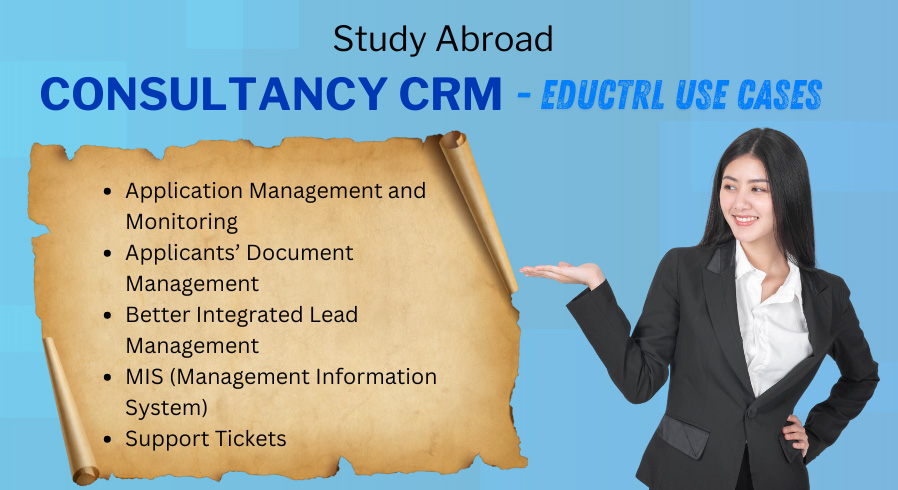
EduCtrl's documented features include student profiles, document uploads, application management, staff roles, activity logs and communication tools. Its student management knowledgebase provides guidance on using these workflows.
For example, an admission counsellor can manage an applicant's university preferences and application progress through a structured student record rather than maintaining separate files across multiple devices.
How Should Educational Institutions Manage Student Consent and Data Retention?
Institutions should explain their data-handling practices clearly before collecting student information.
For example, a study-abroad consultancy collecting details through an enquiry form should identify the information required for counseling and explain any separate marketing communications.
An effective privacy notice should describe the purposes of collection, relevant sharing practices, retention arrangements and available privacy rights.
Data retention is equally important. Institutions should define how long different records remain necessary, considering legal obligations and operational needs.
Once information is no longer required and no applicable retention obligation prevents deletion, it should be securely erased or appropriately anonymised.
EduCtrl offers configurable lead-capture forms through its website and lead management solution, which institutions can evaluate when designing transparent enquiry processes.
What Should You Do If Student Data Is Compromised?
A documented incident-response plan helps institutions react quickly and consistently.
Contain the incident: Disable compromised accounts and restrict affected systems.
Assess the exposure: Identify the affected records, individuals and systems.
Preserve evidence: Retain relevant logs and incident details securely.
Notify appropriately: Determine applicable CERT-In, DPDP and other reporting requirements.
Restore operations: Recover verified data and address the underlying vulnerability.
Prevent recurrence: Review access permissions, training and technical safeguards.
Institutions should assign incident-response responsibilities before a breach occurs, rather than making decisions during an emergency.

Best Practices for Maintaining Long-Term CRM Security
Data protection requires continuous attention rather than a one-time configuration.
Educational administrators should conduct periodic access reviews, monitor suspicious activities, assess third-party integrations and provide practical cybersecurity training.
A useful monthly security checklist includes reviewing inactive staff accounts, checking unnecessary document access, confirming backups and verifying that privacy notices remain accurate.
Institutions can also examine EduCtrl's CRM pricing and feature overview to identify available administrative functions and prepare specific security questions for the provider.
Conclusion
Protecting student information requires more than installing software. Educational institutions need responsible data collection, appropriate access permissions, secure document handling, regular backups and effective incident-response procedures.
A carefully configured CRM Education solution can support organised student management while helping administrators maintain oversight of important workflows. However, security outcomes depend on both the platform's verified capabilities and the institution's own practices.