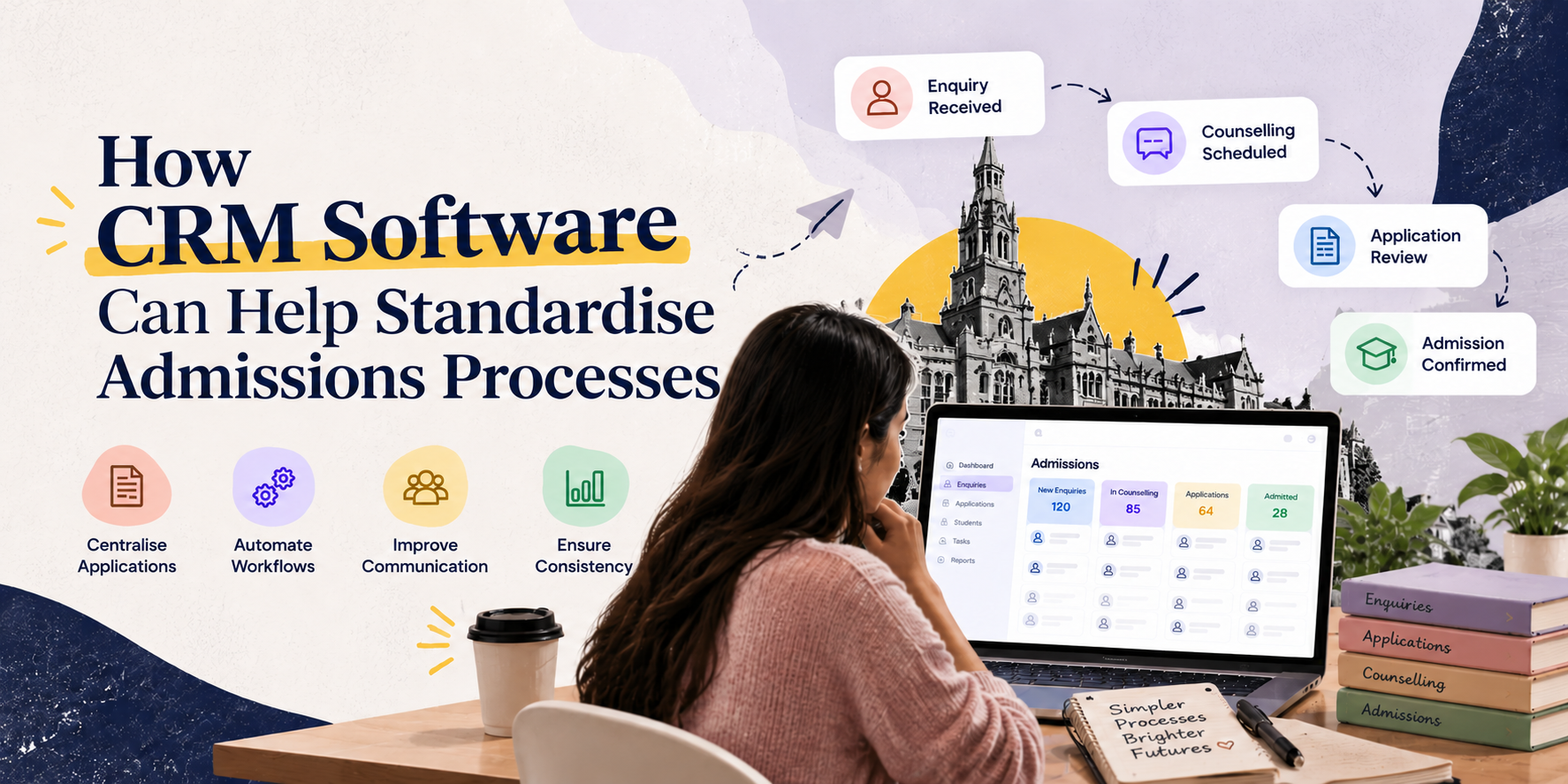
Understanding the Need for Standardised Admissions Processes
Standardised admissions processes help educational institutions maintain consistency, efficiency, and transparency. When teams follow clearly defined procedures, applicants can be evaluated using consistent criteria, and staff can manage applications more effectively.
Key Benefits of Standardisation
- Fairness: Consistent evaluation criteria help reduce avoidable differences in how applications are reviewed.
- Efficiency: Defined workflows help admissions staff complete tasks and make decisions with fewer unnecessary delays.
- Better Data Management: Organised applicant information helps institutions monitor admissions trends and plan future recruitment activities.
Institutions should regularly review their procedures and update them when requirements, policies, or applicant needs change.
Challenges in Current Admissions Processes
Admissions teams may face several challenges when processes rely on manual work or disconnected systems.
- Inconsistent Data Management: Maintaining applicant information across spreadsheets and separate systems can lead to duplicate records and data-entry errors.
- Lack of Transparency: Applicants may struggle to understand their application status when updates and follow-ups are not coordinated.
- Time-Consuming Processes: Manual reviews and repetitive administrative tasks can delay application processing.
- Difficulty Tracking Performance: Without consolidated reporting, institutions may find it difficult to identify bottlenecks and evaluate recruitment activities.
Reviewing existing workflows can help institutions identify these challenges and determine where a CRM system could improve consistency.
How CRM Software Facilitates Admissions Process Standardisation
CRM software helps educational institutions organise applicant information, establish repeatable workflows, and coordinate admissions activities. When configured around clearly defined procedures, it gives teams a consistent way to manage applications and communicate with prospective students.
- Automated Workflows: Automate routine tasks such as acknowledging enquiries, assigning follow-ups, and sending document reminders.
- Customisable Dashboards: Monitor application statuses, pending tasks, and admissions progress from a central dashboard.
- Standardised Procedures: Establish consistent steps, responsibilities, and criteria for relevant stages of the admissions process.
- Communication Templates: Use approved templates for common messages to maintain consistent and professional communication.
Automated Communication
Automated communication helps admissions teams respond consistently to prospective students and keep them informed throughout the application journey.
- Instant Acknowledgements: Send confirmation messages when enquiries are received.
- Scheduled Reminders: Remind students about appointments, application deadlines, and pending documents.
- Follow-Up Sequences: Create structured follow-ups after enquiries, counselling sessions, or application submissions.
Communication workflows should be reviewed regularly to ensure messages remain relevant, accurate, and appropriate for each stage of the admissions journey.
Centralised Data Management
Centralised data management brings applicant information together in one accessible system, helping admissions teams work with consistent and up-to-date records.
- Easy Access: Staff can retrieve relevant applicant details and communication histories without searching through multiple systems.
- Improved Collaboration: Teams can coordinate their activities using shared records and clearly assigned responsibilities.
- Simplified Reporting: Consolidated information helps institutions review application progress and identify recurring operational challenges.
Institutions should also establish appropriate access permissions, data-maintenance procedures, and backup practices to protect applicant information.
Customisable Workflows
Customisable workflows allow institutions to align CRM processes with their admissions policies and operational requirements.
- Defined Process Stages: Set clear stages for enquiry handling, counselling, application review, and subsequent actions.
- Task Assignments: Assign responsibilities to relevant team members so each step has a clear owner.
- Automated Notifications: Notify staff when applications require attention or important tasks are approaching their deadlines.
- Conditional Workflows: Where supported, configure different actions according to application status or other relevant criteria.
Gathering feedback from admissions staff and reviewing workflow performance can help institutions refine their processes over time.
Key Features of CRM for Admissions Management
- Centralised Applicant Records: Maintain applicant details, application history, and interaction records in one place.
- Communication Management: Coordinate emails, reminders, and follow-ups across the admissions journey.
- Tracking and Reporting: Monitor application progress, pending activities, and relevant admissions metrics.
- Customisable Workflows: Configure processes to match institutional procedures and team responsibilities.
- Integration Capabilities: Connect with compatible systems where supported to reduce disconnected data and repetitive work.
- User-Friendly Interface: Provide staff with an accessible system that supports everyday admissions activities.
Benefits of Using Admissions CRM Software
When implemented effectively, admissions CRM software can help institutions establish more consistent processes and improve operational visibility.
- Improved Efficiency: Structured workflows and automation reduce repetitive administrative work.
- Better Data Consistency: Centralised records help teams access and maintain applicant information more effectively.
- Clearer Accountability: Assigned tasks and activity records make responsibilities easier to follow.
- More Consistent Communication: Shared templates and coordinated follow-ups help applicants receive relevant information at the right stage.
- Better Decision-Making: Reporting helps admissions managers identify delays, review performance, and make informed process improvements.
Improved Efficiency and Accuracy
CRM software can reduce manual effort by organising applicant records and automating suitable routine tasks. Staff can spend less time searching for information and more time supporting applicants with questions that require personal attention.
Regularly reviewing data quality, task completion, and workflow performance helps institutions identify errors and opportunities for improvement.
Enhanced Student Experience
A well-organised admissions process makes it easier for prospective students to understand requirements and receive timely updates.
- Relevant Communication: Share information that matches applicants' programme interests and application stages.
- Consistent Information: Help staff provide accurate answers using centralised records and approved communication materials.
- Timely Updates: Keep applicants informed about important deadlines, outstanding documents, and next steps.
By combining clear procedures with appropriate CRM tools, institutions can create a more coordinated and supportive admissions experience.
Conclusion
Standardising admissions processes helps educational institutions manage applications more consistently, coordinate staff responsibilities, and improve communication with prospective students. CRM software can support these goals through centralised records, structured workflows, automated reminders, and reporting capabilities.
To get started, institutions should:
- Review existing admissions procedures and identify common bottlenecks.
- Define clear process stages, responsibilities, and communication standards.
- Configure CRM workflows to support these procedures.
- Train staff and regularly review performance to identify areas for improvement.
With the right processes and CRM configuration, education teams can create a more organised admissions operation and deliver a more consistent experience for applicants.