Understanding the Role of Education CRM in Counselling
Education CRM systems are designed to streamline the counselling process, enhancing communication and efficiency. By automating various tasks, these systems allow counsellors to focus more on student needs rather than administrative duties.
Key Roles of Education CRM in Counselling:
- Centralized Information: All student data, including academic records and counselling notes, is stored in one place. This accessibility enables counsellors to quickly review a student's history before sessions, leading to more personalized advice.
- Automated Scheduling: CRM tools can manage appointments, send reminders, and reduce no-show rates. For example, a school using an Education CRM saw a 30% decrease in missed appointments after implementing automated reminders.
- Data-Driven Insights: Many CRMs offer analytics that can identify trends in student behaviour. By analyzing these patterns, counsellors can proactively address issues, such as declining academic performance.
Pro Tip: Leverage CRM reporting features to track student outcomes. This can help in tailoring future counselling strategies based on what has worked best in the past.
With these functionalities, Education CRMs not only improve the counselling workflow but also enhance the overall student experience.
Streamlining Student Data Management
Managing student data can often feel overwhelming without the right tools. An Education CRM helps streamline this process by centralizing information, making it accessible and manageable.
- Centralized Database: All student records, including applications, transcripts, and communications, can be stored in one place. This reduces the risk of lost documents and ensures that everyone on the counseling team is on the same page.
- Automated Data Entry: With features that automatically input data from applications, manual errors are minimized. For example, one institution reported a 40% reduction in data entry errors after implementing an Education CRM.
- Real-time Updates: Changes to student information can be updated in real-time, ensuring that all staff members have the latest information. This is especially crucial during peak enrollment periods.
- Pro Tip: Regularly review your CRM’s data management capabilities. Many systems offer customizable fields that can be tailored to meet specific institutional needs.
By leveraging an Education CRM, institutions can enhance their student data management workflow, allowing counselors to focus more on supporting students rather than getting bogged down by administrative tasks.
Improving Communication with Prospective Students
Effective communication with prospective students is crucial for successful counseling. Education CRMs can streamline this process significantly.
- Personalized Messaging: Use the CRM to segment your audience based on interests and demographics. For instance, a CRM can automate personalized emails to high school seniors interested in engineering programs, addressing them by name and including tailored content.
- Timely Follow-Ups: Set reminders for follow-ups after initial contact. A prospective student may forget to respond, but a gentle nudge can rekindle their interest. Implementing a system that tracks communication history is key.
- Multi-Channel Communication: Utilize various channels, email, SMS, and social media. According to a 2024 survey by Statista, 78% of students prefer receiving information through multiple platforms.
Pro Tip: Always close communications with a question. This encourages engagement and helps understand their specific needs better.
For example, a university found that sending a brief survey link at the end of an email increased response rates by 30%. By employing these strategies, you can enhance your outreach and foster stronger relationships with prospective students.
Enhancing Counselling Workflow Management
Implementing an effective counselling workflow management system can drastically improve the efficiency of educational institutions. Streamlining tasks allows counsellors to focus on what truly matters: supporting students.
- Automated Scheduling: An education CRM can automate appointment bookings, reducing no-shows by sending reminders. For example, a school saw a 30% decrease in missed appointments after integrating automated reminders.
- Centralized Documentation: With all student records in one place, counsellors can quickly access important information. This reduces the time spent searching for files, allowing for more time with students.
- Task Management: A CRM can help track tasks with deadlines, ensuring nothing falls through the cracks. For instance, task assignments for follow-up meetings can be delegated and monitored easily.
Pro Tip: Regularly review and update your CRM’s database to ensure the information is current and relevant. A clean database can significantly enhance communication between staff and students.
By leveraging these tools, educational institutions can create a more responsive and student-centric counselling environment.
Automating Routine Tasks
Automating routine tasks can significantly enhance the efficiency of counseling workflows. By leveraging an education CRM, counselors can minimize manual efforts and focus on what truly matters: supporting students.
- Appointment Scheduling: Use automated scheduling tools that sync with calendars, allowing students to book their sessions without back-and-forth emails.
- Follow-Up Reminders: Set up automated email or SMS reminders for upcoming appointments, ensuring students don’t miss their sessions.
- Data Entry: Automate the collection and entry of student information through forms that directly feed into the CRM, reducing administrative burden.
Pro Tip: Implement chatbots for initial inquiries. They can handle frequently asked questions, directing students to appropriate resources while freeing up counselors for more complex issues.
For example, a mid-sized university implemented an education CRM and saw a 30% reduction in administrative hours spent on scheduling. This allowed counselors to devote more time to student interactions, ultimately improving student satisfaction rates.
Scheduling and Reminders
Effective scheduling and reminders are crucial in managing counseling sessions. Education CRMs streamline this process, significantly reducing the chances of missed appointments.
- Automated reminders: can be sent via email or SMS, ensuring that both counselors and students are on the same page.
- Use calendar integrations to sync with existing tools like Google Calendar or Outlook. This allows for real-time updates and notifications.
For example, a school using an education CRM found that automated reminders reduced no-shows by 30% in just one semester, improving overall engagement in counseling services.
Pro Tip: Set reminders for both students and counselors 24 hours before an appointment. This gives ample time for preparation and adjustments if needed.
Additionally, consider establishing a consistent scheduling format. For instance, designate specific days and times for counseling sessions each week. This not only helps in planning but also builds a routine for students, making them more likely to attend.
Facilitating Better Follow-Ups
A well-designed Education CRM can significantly enhance follow-up processes, ensuring that no student feels overlooked. With automated reminders and tracking, counselors can manage follow-ups efficiently and effectively.
- Automated Reminders: Set up the CRM to send automated follow-up reminders based on student interactions. For example, if a student hasn’t responded after an initial consultation, the CRM can trigger a follow-up email a week later.
- Customizable Templates: Use customizable email templates for different follow-up scenarios. This saves time and ensures consistency in communication, making it easier to maintain a professional tone.
- Tracking Engagement: Keep an eye on student engagement metrics. If a student opens an email but doesn’t reply, consider reaching out via phone or scheduling a personal meeting to address any concerns directly.
Pro Tip: Regularly review follow-up success rates and adjust strategies accordingly. For instance, if data shows that students prefer text messages, consider incorporating SMS follow-ups for quicker engagement. By making data-driven adjustments, counselors can foster stronger relationships and improve conversion rates.
Utilizing Analytics for Informed Decision-Making
Utilizing analytics effectively can transform your decision-making process in counselling workflows. By leveraging data-driven insights, education institutions can identify trends, optimize processes, and enhance student engagement.
- Track student interactions: Utilize CRM analytics to monitor timestamps and frequency of student-counsellor interactions. For instance, if data shows high engagement during specific periods, you can adjust your counselling schedules accordingly.
- Evaluate program effectiveness: Analyze outcomes from different counselling programs. If students who participated in a particular workshop show a 30% improvement in academic performance, it may warrant more frequent sessions.
- Segment your audience: Use analytics to identify different student needs based on demographics or past inquiries. Tailoring your approach can increase the effectiveness of your counselling efforts.
- Predictive analytics: Implement tools that forecast which students might need additional support. For example, if data indicates that students with certain course loads struggle more, proactive outreach can be initiated.
Pro Tip: Regularly review and adjust your analytics criteria to ensure they align with evolving educational goals and student needs. This practice not only enhances engagement but also fosters a responsive counselling environment.
Tracking Student Engagement
Tracking student engagement is crucial for counselors to understand how effectively they connect with students. Utilizing an Education CRM can streamline this process, providing insights that inform counseling strategies.
- Real-Time Analytics: Monitor student interactions through various channels, such as emails, chat sessions, and appointments. For example, a school might find that 75% of students who attend monthly workshops are more likely to seek help later.
- Engagement Scores: Some CRMs allow you to assign scores based on student participation. This metric helps identify at-risk students who may need additional support.
- Custom Surveys: Implement surveys after sessions to gauge student satisfaction and engagement levels. A case study from a high school showed a 40% increase in positive feedback after modifying sessions based on survey results.
Pro Tip: Schedule regular check-ins with students who show low engagement scores. A personal touch can often rekindle interest and encourage students to utilize available resources.
Measuring Counselling Effectiveness
Measuring the effectiveness of counselling sessions is crucial for continuous improvement and ensuring the best outcomes for students. Without proper metrics, it’s challenging to assess what works and what doesn’t.
Key Indicators of Effectiveness:
- Feedback Surveys: After each session, collect feedback from students to gauge their satisfaction and perceived value.
- Goal Achievement: Track the progress of students towards their specific goals. Are they moving closer to their objectives?
- Session Attendance: Monitor attendance rates. High attrition can indicate a disconnect in the counselling process.
Example: A small education institution used a simple post-session survey and found that 85% of students felt more prepared to tackle personal issues after counselling. This helped them adjust their approach to better meet student needs.
Pro Tips:
- Implement regular review meetings to discuss outcomes and adjust strategies accordingly.
- Use CRM tools to analyze trends over time, allowing for data-driven decisions that enhance counselling effectiveness.
By actively measuring counselling effectiveness, educational institutions can ensure they provide valuable support to their students.
Conclusion
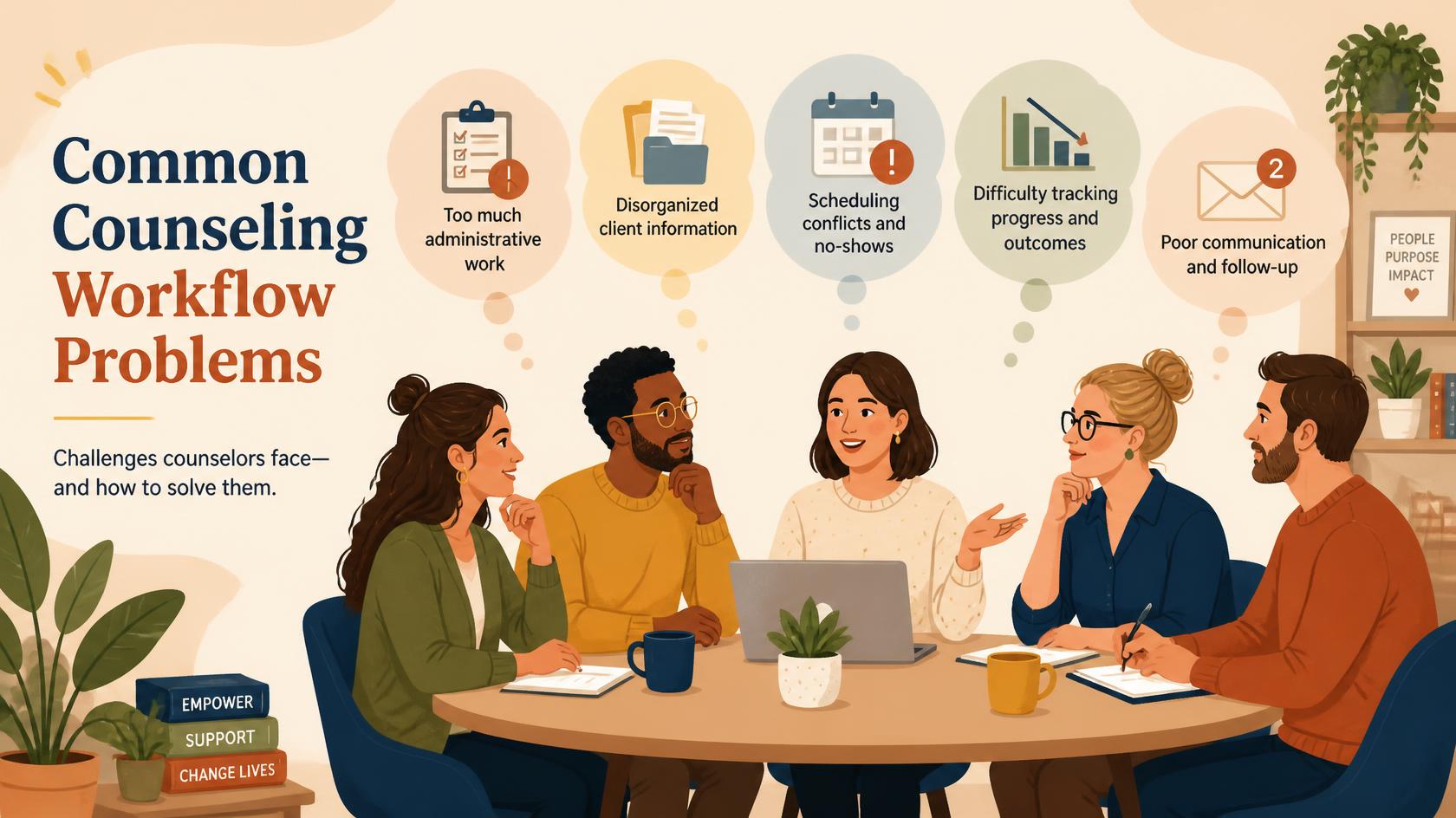
In summary, addressing common counselling workflow problems is essential for maximizing the efficiency of educational institutions. An Education CRM can significantly streamline processes and enhance communication. Key takeaways include:
- Centralized Information: All student data is easily accessible, eliminating the need for misplaced files or scattered records.
- Automated Reminders: CRM tools can send timely reminders for appointments, ensuring that no student misses important sessions.
- Improved Communication: Direct messaging features allow for quick and effective interaction between counsellors and students, fostering better relationships.
For instance, a university that implemented a CRM saw a 30% increase in student engagement due to improved availability and follow-ups.
Pro Tip: Regularly analyze CRM data to identify trends or issues within your counselling processes. This proactive approach can lead to continuous improvement.
To transform your counselling workflow, consider integrating an Education CRM into your operations. Start your journey towards enhanced efficiency today!