Understanding IELTS and TOEFL
Understanding IELTS and TOEFL
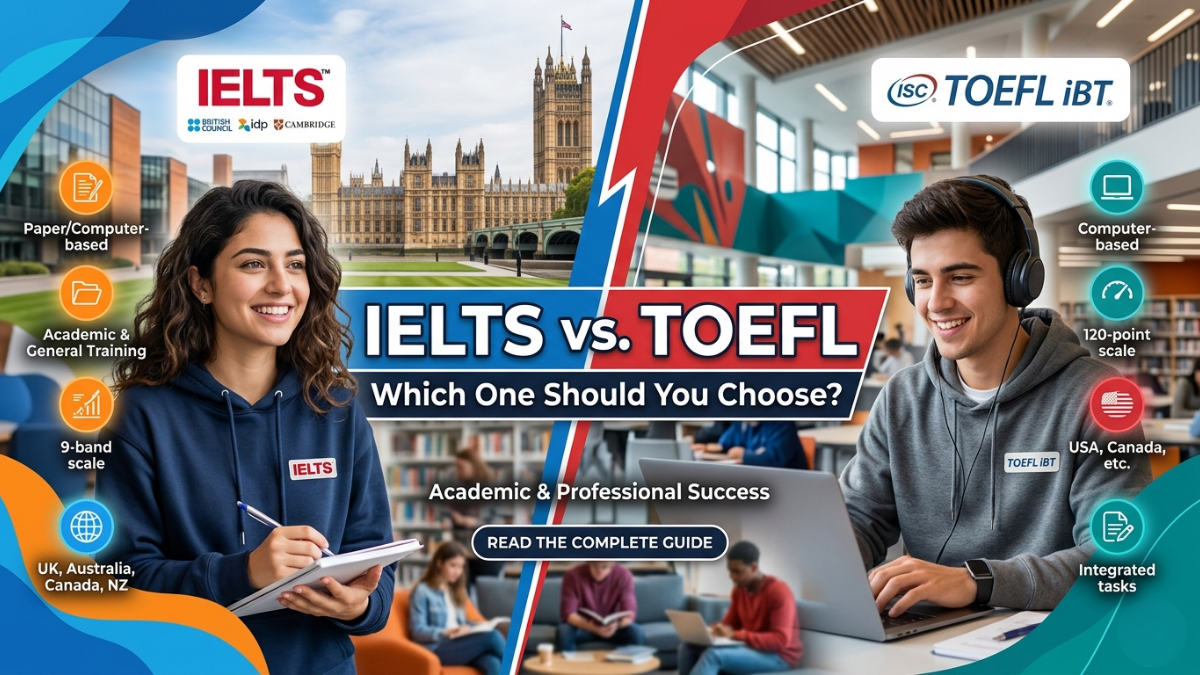
The IELTS (International English Language Testing System) and TOEFL (Test of English as a Foreign Language) are both widely recognized tests for non-native English speakers. They assess your proficiency in listening, reading, writing, and speaking.
- IELTS:
- Offered in two formats: Academic and General Training.
- Features a face-to-face speaking section.
- Scored on a band scale from 1 to 9.
- Example: Ideal for students planning to study in the UK, Australia, or Canada.
- TOEFL:
- Primarily Academic, focusing on university-level English.
- Conducted entirely online, including speaking via a computer.
- Scored out of 120 points.
- Example: Preferred by US institutions as it aligns closely with classroom English usage.
Pro Tip: Research the requirements of your target institutions; some may prefer one test over the other. For instance, a survey by Education Corner in 2023 highlighted that 60% of US universities accept TOEFL scores, while 48% accept IELTS scores. Ultimately, your choice may depend on your personal comfort with the test format and your study goals.
What is IELTS?
The International English Language Testing System (IELTS) is a globally recognized test that assesses English language proficiency. It is designed for non-native English speakers who want to study or work in environments where English is the primary language.
There are two main types of IELTS:
- IELTS Academic: For those applying for higher education or professional registration.
- IELTS General Training: For those looking to migrate to an English-speaking country or undertake non-academic training.
The test comprises four sections:
- Listening
- Reading
- Writing
- Speaking
Each section evaluates different language skills, ensuring a comprehensive assessment. For example, in the Speaking section, candidates engage in a face-to-face interview with an examiner, allowing for a more realistic assessment of conversational skills.
Pro tip: Prepare by practicing with sample tests available on the official IELTS website, as familiarizing yourself with the test format can significantly improve your performance.
What is TOEFL?
The TOEFL, or Test of English as a Foreign Language, is a widely recognized assessment designed to measure English language proficiency for non-native speakers. It assesses the ability to understand and use English in an academic setting, making it a popular choice for students seeking admission to universities in English-speaking countries.
Key features of the TOEFL include:
- Format: The test is divided into four sections: Reading, Listening, Speaking, and Writing. Each section evaluates different language skills.
- Scoring: Scores range from 0 to 120, with each section contributing to the overall score. Most universities require scores between 70 and 100 for admission.
- Duration: The TOEFL takes approximately 3 hours to complete.
For instance, a student from Brazil aiming to study engineering in the U.S. may choose the TOEFL to demonstrate their language proficiency. It is essential to prepare for the specific format and content of the test.
Pro Tip: Use official TOEFL practice materials to familiarize yourself with the test structure and question types. This can significantly enhance your performance.
Key Differences Between IELTS and TOEFL
- Test Format: IELTS includes both a paper-based and a computer-based option, while TOEFL is primarily computer-based. For instance, if you're more comfortable with handwriting, IELTS may be preferable.
- Scoring System: IELTS scores range from 1 to 9 in half-point increments. TOEFL scores range from 0 to 120. If you need a specific score for university admission, check what each institution accepts.
- Speaking Component: IELTS features a face-to-face speaking test with an examiner, providing a more conversational experience. TOEFL has a computer-based speaking section where you respond to prompts. Consider what type of interaction you prefer.
- Content Focus: IELTS often emphasizes British English, while TOEFL uses American English. If you're planning to study or work in a specific region, familiarity with that version of English can be advantageous.
- Preparation Style: Some students find IELTS more straightforward due to its direct question styles, while others prefer the structured approach of TOEFL. Explore sample questions for both tests to determine which format suits your style better.
- Pro Tip: Take practice tests for both IELTS and TOEFL to understand which format aligns with your strengths and comfort level.
Format and Structure
The IELTS and TOEFL tests differ significantly in format and structure, catering to diverse test-taker preferences.
IELTS is divided into four sections:
- Listening (30 minutes): Features four recorded texts, including conversations and monologues.
- Reading (60 minutes): Consists of three passages with various question types.
- Writing (60 minutes): Two tasks, including a descriptive report and an essay.
- Speaking (11–14 minutes): A face-to-face interview with an examiner.
Example: A candidate may find the speaking section of IELTS more comfortable due to its interactive nature.
TOEFL, on the other hand, follows an integrated format:
- Listening (28-39 minutes): Includes lectures and conversations with comprehension questions.
- Reading (54-72 minutes): Comprises multiple academic texts.
- Writing (50 minutes): Involves two tasks—one integrated and one independent.
- Speaking (20 minutes): Conducted via a microphone, with responses recorded.
Pro Tip: If you’re more comfortable with in-person interactions, IELTS might be the better option. Conversely, those who excel in a computer-based setting may prefer TOEFL.
Scoring Systems
The scoring systems for IELTS and TOEFL differ significantly, impacting how test-takers approach their preparation.
- IELTS is scored on a band scale from 1 to 9, with half-point increments. Each section—Listening, Reading, Writing, and Speaking—contributes equally. For instance, an overall score of 6.5 indicates a competent level of English, while a 7.5 reflects a good command of the language.
- TOEFL uses a scoring system from 0 to 120, with each section (Reading, Listening, Speaking, Writing) graded out of 30. A combined score of 90 is generally considered a good benchmark for university admissions.
Pro Tips:
- Understand the required scores of your target institutions; some may prefer IELTS, while others favor TOEFL.
- Practice with each test’s format, as familiarity can enhance your performance significantly.
Ultimately, choose the test that aligns best with your strengths and the requirements of your academic or professional goals.
IELTS vs TOEFL for Study Abroad
When considering IELTS vs TOEFL for studying abroad, it's important to understand the nuances that might influence your choice. Both tests assess English proficiency, but they cater to different audiences and academic environments.
- Test Format:
- IELTS includes both a paper-based and a computer-based option, while TOEFL is primarily computer-based.
- IELTS features a speaking test with a live examiner, whereas TOEFL uses a recorded speaking section.
- Acceptance:
- Many universities worldwide accept both tests, but some institutions favor one over the other. For example, universities in the UK often prefer IELTS, while U.S. universities may lean towards TOEFL.
- Scoring:
- IELTS scores range from 1 to 9, with 6.5 often being the minimum requirement for many programs.
- TOEFL scores range from 0 to 120, with a score of around 90 being competitive for most universities.
Pro Tip: Research your target schools to see which test they prefer. If you’re more comfortable with face-to-face interaction, IELTS might be the better choice for you. Conversely, if you excel in a computer-based environment, TOEFL could be your best bet.
Recognized Universities and Countries
Many universities and countries recognize both IELTS and TOEFL scores, but their preferences can vary significantly. It’s essential to know which test aligns with your target institution.
Countries that predominantly accept IELTS:
- United Kingdom: Nearly all universities, including Oxford and Cambridge, favor IELTS.
- Australia: Institutions like the University of Melbourne and the University of Sydney recognize IELTS as a key requirement.
- Canada: Many universities, such as the University of Toronto, accept both tests but often prefer IELTS for immigration purposes.
Countries that are more inclined towards TOEFL:
- United States: Most universities, including Harvard and Stanford, primarily accept TOEFL scores.
- Japan: Institutions like the University of Tokyo often list TOEFL as a requirement.
- South Korea: Many universities still favor TOEFL, especially for graduate programs.
Pro Tip: Always check the specific requirements of your target universities. Some may accept both tests but have minimum score requirements that differ. Use a tool like the IELTS and TOEFL comparison chart available on educational websites for quick reference.
Which Test is More Suitable for You?
Choosing between the IELTS and TOEFL depends on various factors, including your personal preferences, study goals, and the requirements of your intended institution. Consider the following aspects to determine which test suits you best:
- Test Format:
- The IELTS includes a face-to-face speaking component, which some students find more natural.
- The TOEFL’s speaking section is conducted via a microphone, appealing to those comfortable with digital formats.
- Content Focus:
- If you’re looking to study in the UK, Australia, or Canada, IELTS is widely accepted and often preferred.
- The TOEFL is predominantly recognized in the US and may favor students aiming for institutions there.
- Preparation Style:
- IELTS requires knowledge of British English, while TOEFL focuses on American English. Choose based on your familiarity with either variant.
Pro tips:
- Take a practice test for both to assess your comfort level and skills.
- Check specific university requirements; some may have a clear preference for one over the other.
By aligning your choice with your goals and strengths, you’ll set yourself up for success.
Skill Focus: Speaking, Listening, Reading, Writing
- Speaking: In the IELTS, the speaking test is a face-to-face interview with an examiner. You'll engage in a conversation, providing a more personal touch. In contrast, the TOEFL uses a computer-based speaking test where you respond to prompts. This can feel less conversational, which may impact your performance if you're not comfortable with technology.
- Listening: Both tests assess listening skills but in different formats. IELTS features a variety of accents, while TOEFL primarily uses American English. If you're unfamiliar with different English accents, the IELTS might be more beneficial for your exposure.
- Reading: IELTS includes a mix of texts, such as newspaper articles and academic passages, which can be more relatable. TOEFL, on the other hand, focuses on academic texts, making it suitable for those planning to study in an English-speaking environment.
- Writing: IELTS writing is divided into two tasks, including a descriptive task. TOEFL requires you to integrate reading and listening materials into your writing, which is excellent for academic contexts.
Pro Tip: Assess your personal strengths. If you excel in oral communication, IELTS might suit you better. If you're comfortable with technology and academic contexts, consider TOEFL.
Conclusion
Choosing between the IELTS and TOEFL depends on various factors tailored to your needs. Here are the key takeaways:
- Test Format: IELTS includes a speaking interview, making it ideal for those who prefer face-to-face interaction. Conversely, TOEFL’s computer-based format may suit tech-savvy individuals.
- Scoring System: IELTS scores range from 1 to 9, while TOEFL scores range from 0 to 120. Understanding these scales can help align your preparation with your target institution's requirements.
- Acceptance: Both tests are widely accepted, but check the specific requirements of your universities. Some institutions prefer one test over the other.
- Preparation: Invest time in practice tests for both exams. Resources like the official practice materials or prep courses can significantly boost your confidence and performance.
Pro Tip: If possible, take a diagnostic test for both to see which format you feel more comfortable with. Your comfort level can greatly affect your score!
Ultimately, consider your personal preferences, deadlines, and the institutions you aim to apply to when making your final decision.