
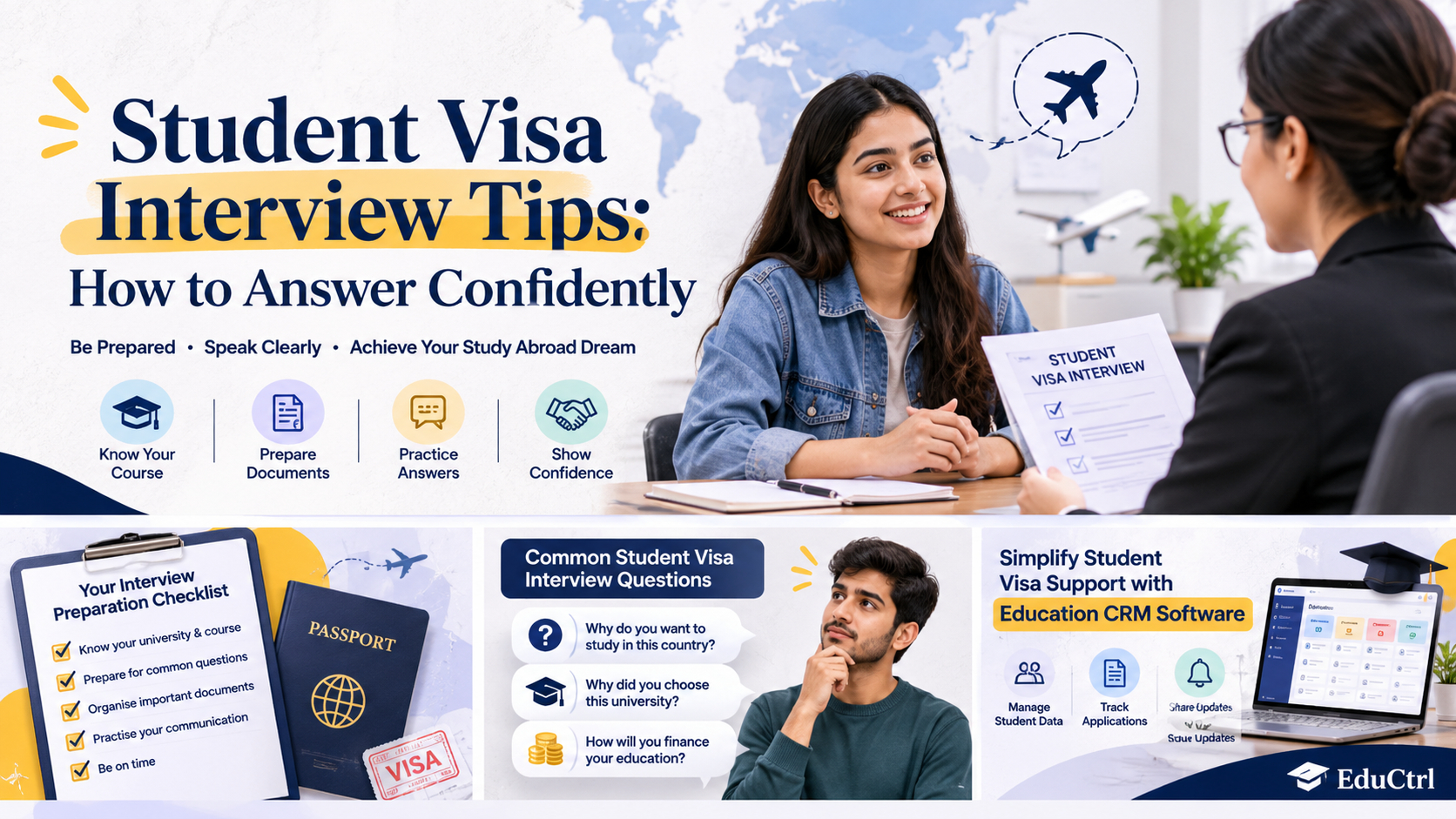
1. Understand the Purpose of a Student Visa Interview
A student visa interview helps immigration or consular officers assess whether an applicant genuinely intends to study in the destination country and meets the relevant visa requirements.
Although the exact process varies by country, officers commonly want to understand:
Why did you select that particular country?
Why you chose the university and course.
How you plan to pay for tuition and living expenses.
Whether you understand your course and its career opportunities.
Whether your study plans are genuine and consistent with your application.
The objective is not to memorize perfect answers. It is to demonstrate that you have made an informed decision and can explain your plans clearly.
2. Research Your University and Chosen Course
One of the most common mistakes students make is attending an interview without knowing enough about their university or program.
Before the interview, research the following:
University details: Know the university's name, location, reputation and relevant facilities.
Course structure: Understand the subjects, duration, learning outcomes and specializations.
Course selection: Be prepared to explain why the programe matches your academic background.
Career opportunities: Understand how the qualification supports your professional goals.
For example, if you are applying for a Master's in Data Science, you should be familiar with important subjects such as machine learning, statistics and data analytics.
3. Prepare Answers to Common Student Visa Interview Questions
Practicing frequently asked questions helps reduce nervousness and improves response quality.
Why do you want to study in this country?
Explain the academic advantages, teaching approach, industry exposure or course opportunities that influenced your decision.
Avoid giving answers based only on lifestyle, travel or the country's popularity.
Why did you choose this university?
Mention specific reasons, such as course modules, academic facilities, research opportunities or industry connections.
For example: "I selected this university because its programme includes practical data analytics modules that align with my previous studies and career interests."
Why did you choose this particular course?
Connect your academic background, interests and career goals. Explain what skills you expect to develop through the programme.
How will you finance your education?
Clearly explain who will sponsor your education and how tuition fees and living expenses will be covered.
Know the relevant financial details, including available funds, funding sources and supporting documents. Your answers must match the evidence submitted with your application.
What are your plans after completing your studies?
Explain your genuine career intentions and how the qualification fits into them. Be truthful about your plans and understand the immigration rules that apply to your destination country.
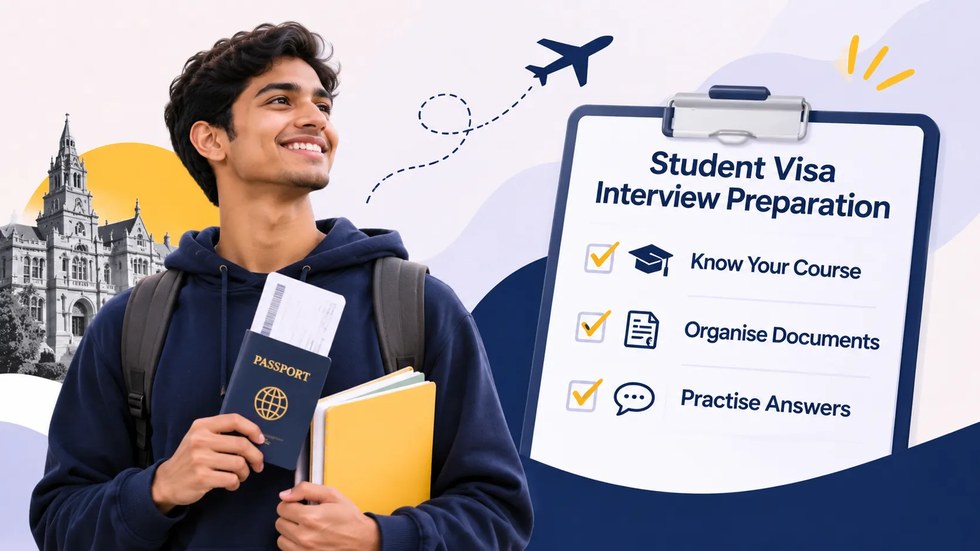
4. Organize Your Documents Before the Interview
A confident answer is important, but supporting documents are equally essential. Missing or inconsistent paperwork can create unnecessary complications.
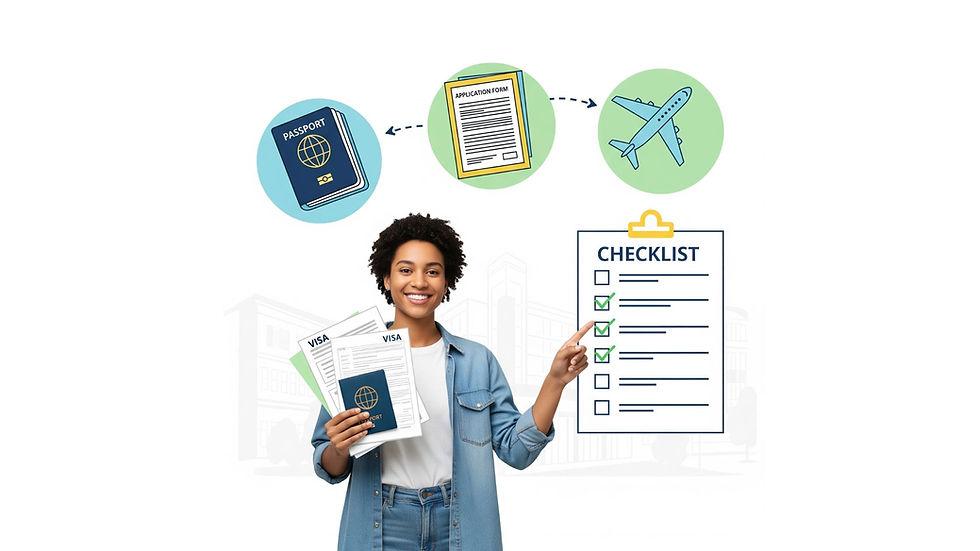
Depending on the destination country's requirements and your individual circumstances, prepare:
Valid passport.
University offer or admission letter.
Confirmation of enrolment or equivalent visa document, where applicable.
Academic transcripts and certificates.
English language test results, if required.
Financial statements and sponsorship documents.
Scholarship or education loan documents, if applicable.
Accommodation details, if requested.
Visa application form and appointment confirmation.
Any additional documents specified by the relevant immigration authority.
Arrange your documents in a logical order and check that the information matches your visa application.
For education consultants: Managing documents across multiple students can become difficult, particularly during busy admission seasons. EduCtrl provides a student portal where applicants can upload academic certificates, English test results, passports, CVs, SOPs and other supporting documents. Staff can access student records and download uploaded documents, helping reduce repeated requests and manual file handling.
5. Practice Your Communication and Body Language
Your communication style can influence how clearly the visa officer understands your answers.
Use these simple techniques:
Speak at a comfortable pace. Avoid rushing through answers because of nervousness.
Maintain natural eye contact without staring.
Sit comfortably and maintain an attentive posture.
Listen carefully to each question before responding.
Keep answers relevant and avoid unnecessary explanations.
If you do not understand a question, politely ask the officer to repeat or clarify it.
You do not need an artificial accent or complicated vocabulary. Clear, straightforward English is more useful than trying to sound overly formal.
Consider practicing with a friend, family member or education counselor. Mock interviews can help identify unclear answers and improve confidence.
6. Avoid Common Student Visa Interview Mistakes
Even well-prepared applicants can make mistakes under pressure. Being aware of these issues can help you avoid them.
Memorizing answers word for word: Scripted responses can sound unnatural. Understand the important points and explain them in your own words.
Providing incorrect information: Never exaggerate academic achievements, financial resources or future plans. Always provide truthful information.
Not knowing financial details: Understand your sponsor's occupation, funding arrangements and the documents supporting your financial position.
Giving inconsistent answers: Your interview responses should align with your application form and supporting documents.
Criticizing other universities: Explain why your selected institution suits your needs instead of speaking negatively about other options.
Guessing when unsure: If you do not know something, avoid inventing an answer. Respond honestly and politely.
7. How Education Consultants Can Support Students Throughout Visa Preparation
Preparing students for visa interviews involves more than conducting a mock interview. Consultants must coordinate student profiles, university applications, documentation, communication and important deadlines.
This is where a structured management system becomes valuable.
With Education CRM Software, overseas education agencies can organize several important activities from one central platform.
Here is how EduCtrl can support consultancy operations:
Centralized student profiles: Maintain academic details, English test scores, professional experience and other student information.
Document management: Allow students to upload certificates, passports, CVs, SOPs and other required files through their student portal.
Application tracking: Monitor university application stages, update progress and keep students informed.
Visa and service management: Manage visa-service applications and configure service-related workflows and statuses.
Automated communication: Use email, SMS and WhatsApp communication features to share updates and reminders.
Follow-up management: Assign counselors, record follow-up activities and schedule reminders so that important tasks are not overlooked.
These features help consultants spend less time searching for records and more time providing meaningful guidance to students.
For example, when a student receives a university offer, the counselor can review the student's academic profile, check available documents, monitor the application progress and coordinate the next steps. This creates a more organized experience for both the student and the consultancy team.
Conclusion
A successful student visa interview starts with proper preparation, not memorized answers. Understanding your course, researching your university, organizing financial documents and practicing clear communication can help you approach the interview with greater confidence. Education consultants also play an important role by providing timely guidance and keeping student information organized throughout the process.
For overseas education agencies looking to streamline these responsibilities, Education CRM Software can make student management, document handling, application tracking and communication more efficient. EduCtrl brings these consultancy activities together through its administrative and student portals, helping teams manage the study abroad journey in a more organized way.